
Solar-Powered EV Charging Stations Enhance Business Growth
Electric vehicles are becoming an increasingly visible part of the transportation landscape, creating greater demand for convenient charging locations. For businesses, that shift presents an opportunity to provide a useful amenity while building infrastructure that supports long-term sustainability goals.
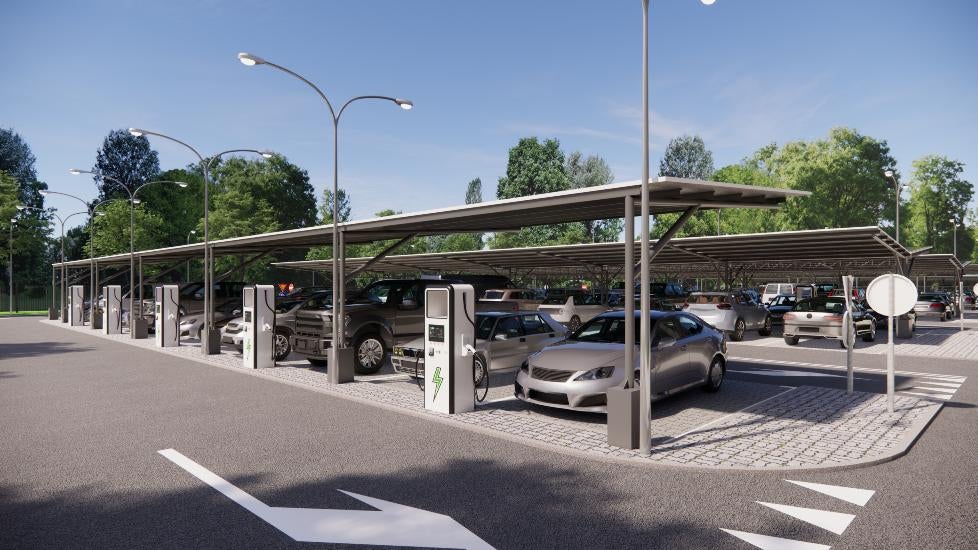
Solar-powered EV charging stations combine renewable energy generation with EV charging to provide a practical solution for workplaces, retail centers, commercial properties, and other organizations. When thoughtfully designed, solar EV charging stations for business can support customers and employees, strengthen sustainability initiatives, and help prepare properties for a transportation system increasingly centered around electrification.
What Are Solar-Powered EV Charging Stations?
Solar-powered EV charging stations use electricity generated by photovoltaic panels to supply energy for electric vehicle charging. Depending on system design, solar energy may work alongside grid electricity and energy storage rather than serving as the property’s only source of charging power. For businesses, solar panels might be installed on a building or incorporated into a solar parking canopy positioned over parking spaces and charging equipment. Solar canopies offer an additional advantage by creating shaded, protected parking areas.
How Solar EV Chargers Work
Solar panels generate electricity from sunlight. That energy can then contribute to the electricity required by EV charging equipment. A commercial system may also integrate with the utility grid so charging continues when onsite solar production does not match demand.
Businesses may select different types of EV charging stations for commercial use based on how long vehicles typically remain onsite and the amount of charging power required. For example, Level 2 charging is commonly used at workplaces, hotels, multifamily properties, and retail locations where vehicles may remain parked longer. Adding battery storage is another potential system design consideration, allowing a business to store some solar-generated energy for later use.
Benefits of Solar EV Charging Stations for Businesses
Investing in business EV charging infrastructure can deliver benefits that extend beyond charging vehicles. Some of the most significant benefits include:
- Attract Customers: For retailers, restaurants, hotels, and entertainment destinations, EV charging can make a property more appealing to drivers who want to charge while they visit. Commercial charging providers also identify charging as an opportunity to attract customers and enhance their onsite experience.
- Offer a Valuable Employee Benefit: Workplace charging gives employees another convenient place to charge their EVs. It’s a valuable employee benefit that can help organizations demonstrate leadership in adopting advanced transportation technology.
- Support Fleet Electrification: Companies transitioning some or all of their vehicles to electric models need accessible charging infrastructure. Installing charging equipment at facilities can create a foundation for supporting current and future electric fleet vehicles.
- Create Revenue Opportunities: Depending on the equipment and business model selected, companies may charge drivers for access to their stations. Some commercial charging systems offer payment processing and revenue-control features.
Sustainability Advantages of Solar EV Charging
One of the primary reasons businesses consider solar EV charging solutions is the ability to connect transportation electrification with renewable energy. Solar generation can supplement electricity from the grid and offset some of the electricity consumed during EV charging. Pairing workplace charging with solar can help offset midday EV-charging electricity consumption.
Solar-powered charging can also provide a visible example of a company’s sustainability initiatives. Customers, employees, tenants, and visitors can see renewable energy and EV infrastructure incorporated directly into the property.
Industries Benefiting From Solar EV Charging
- The right configuration depends heavily on who will use the chargers and how long vehicles typically remain at the property. Solar EV charging can be considered across a wide range of commercial environments, including:
- Corporate offices and workplaces
- Retail centers and shopping destinations
- Restaurants and hospitality properties
- Multifamily communities
- Commercial real estate developments
- Parking facilities
- Municipal and government properties
- Educational campuses
- Businesses operating vehicle fleets
Factors to Consider Before Installation
A successful project begins with careful planning. Before investing in solar-powered charging, businesses should consider:
- Current and anticipated EV charging demand
- Available parking and solar installation space
- Existing electrical capacity
- Level 2 versus DC fast-charging needs
- Solar production potential
- Whether battery storage makes sense
- Charger placement and accessibility
- Networking and payment capabilities
- Installation, maintenance, and operating costs
- Scalability for future charging stations
- Available incentives and rebates
Permitting, zoning, accessibility requirements, electrical codes, and utility coordination may also affect commercial installations and can vary by location.
Future Trends in Solar-Powered EV Charging
As EV adoption continues, commercial properties are likely to face greater expectations for convenient charging options. Businesses can respond with infrastructure designed to scale as their charging needs evolve. Smart charging, load management, network connectivity, payment systems, and energy storage provide businesses with additional options for managing their charging infrastructure. Commercial
Solar parking canopies may also become particularly attractive for properties with large parking areas but limited rooftop space, allowing businesses to combine parking, renewable energy production, and vehicle charging within the same footprint.
Build a More Sustainable Future With Solar EV Charging
Better Tomorrow Solar helps Atlanta, GA businesses become more sustainable. For organizations evaluating solar EV charging stations for business, planning is essential. Assessing the property’s electrical infrastructure, parking patterns, solar potential, charging demand, and future growth can help create a solution that delivers value today while leaving room to expand tomorrow. Contact us today to get started.