
How to Know If Your Roof Is Ready for Solar Panels
Because solar panels are installed on the roof of the home, an important question to ask yourself before solar installation is, “Can my roof support a solar energy system?” Solar panels in Atlanta, GA, are designed to be compatible with many different roofing styles and materials. However, if your roof is nearing the end of its usable lifespan, needs repairs, or has an unconventional structure, it may affect your home’s solar eligibility.
Why Roof Condition Matters for Solar
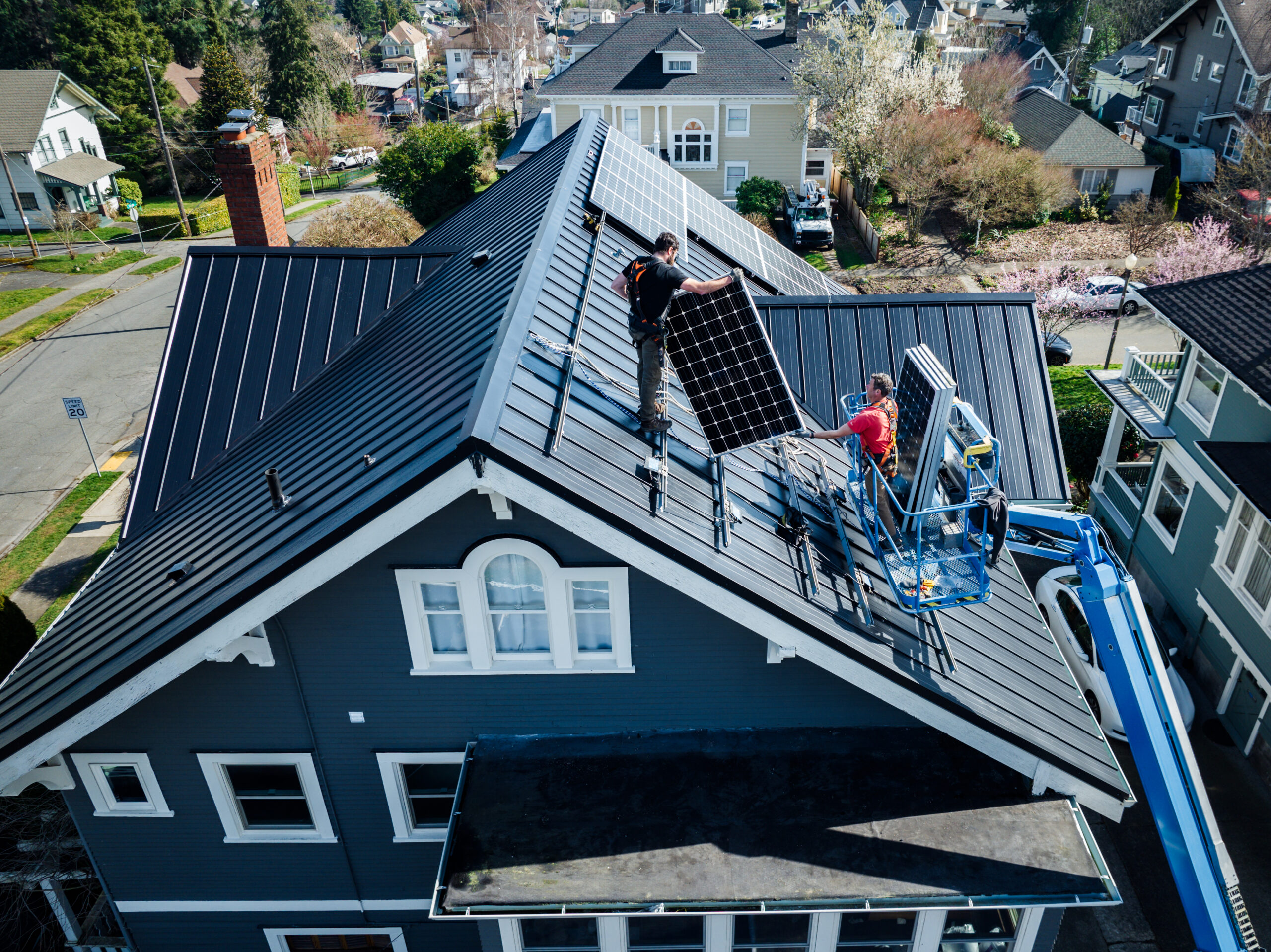
If your roof is not in good condition, installing solar panels can be a recipe for disaster. Solar panels add weight to the roof. If your roof has issues like leaks, structural issues, or missing shingles, its load capacity may be lower, and the weight of your solar panels may lead to a structural failure.
Along with the current condition of your roof, you want to consider its remaining lifespan. Solar panels are designed to last for about 25-30 years. If your roof fails before that time, you may need to remove the solar panels before they have reached their usable lifespan.
Roof Orientation and Sunlight Exposure in Atlanta
Not only do you need to assess the condition of your roof to determine solar eligibility; you also need to think about your roof orientation and sun exposure. If your home is shaded by trees, nearby homes or buildings, or other structures, it may not get adequate sunlight to power your solar system. The orientation of your roof is also important. A south-facing roof is ideal, as it will get the most consistent sunlight throughout the day in every season. West- or east-facing roofs can still provide sufficient power for your home, but you may need to invest in a solar battery to store excess energy, as your system will have higher energy production at certain times of the day.
Structural Integrity and Weight Capacity
Solar panels and their mounting hardware add about 2-4 pounds per square foot of weight on your roof. Most residential roofs are designed to handle up to 20-25 pounds per square foot, so solar panels should not affect the structural integrity of your roof if your roof is in good condition.
Common Roof Types in Georgia and Solar Compatibility
In Georgia, asphalt shingle roofs are most common, and these provide the easiest installation process for solar panels. However, almost any roof type can be solar compatible. Roofs with a slope between 10 and 45 degrees are ideal for supporting solar panels, but flat roofs can hold solar panels as well with the right racking to maintain a favorable tilt angle. If your roof is not compatible with solar panels, you might consider ground-mount solar panels, although these are less common for residential use.
When to Repair or Replace Before Installation
You should consider having your roof repaired or replaced before installing solar panels if:
- Your roof is more than 15 years old.
- You notice visible signs of wear, like missing or curling shingles, or damaged flashing.
- Your roof has structural damage resulting in sagging or leaks.
Schedule Your Solar Introductory Meeting Today
Not sure if your roof is ready for solar panels? Better Tomorrow Solar can help you assess the condition of your roof and understand your home’s solar energy needs with a 30-minute solar introductory meeting. Contact us today to schedule your meeting.
FAQs About Solar Eligibility in Atlanta, GA
Can I install solar panels with a metal roof? Generally, yes, metal roofs can simplify the process of installing solar panels, and can be an ideal surface for residential solar systems thanks to their longevity.
How can I measure how much shade my roof gets? You may not be totally sure about how much shade your roof gets throughout the day. We utilize specialized software that will let us assess whether your roof gets sufficient sunshine to support solar panels.
Is there enough space on my roof for solar panels? Solar panels require about 200-400 square feet of space unobstructed by chimneys, skylights, or other structures.

Contact Us About This Program
In 2025, Georgia Power introduced the Virtual Power Plant (VPP) Pilot Program as part of its Integrated…
When you’re considering making the switch to renewable energy with residential solar in Atlanta, GA, it is important to consider your local climate…